Manufacturing Systems and Design Engineering Programme, Seoul National University of Science and Technology
232 Gongneung-ro, Nowon-gu, Seoul, 139-743, Korea Tel:+82-2-970-7277
Copyright © Seoul National University of Science and Technology. All Rights Reserved.
 Manufacturing AI Lab (MAI Lab)
Manufacturing AI Lab (MAI Lab)
Prof. Bumsoo Park
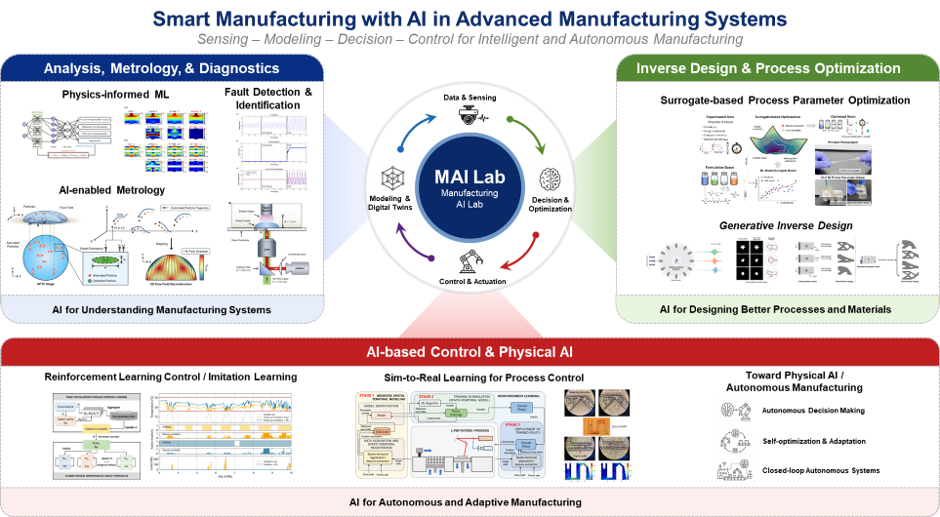
The Manufacturing AI Lab (MAI Lab) investigates intelligent technologies for analyzing, designing, optimizing, and controlling complex manufacturing processes and physical systems by integrating artificial intelligence with physics-based modeling. We employ a broad range of AI methodologies, including physics-informed machine learning, generative AI, and reinforcement learning, to develop technologies for process monitoring and diagnostics, metrology and modeling, inverse design and process optimization, and autonomous control. Ultimately, our research aims to realize intelligent and autonomous manufacturing systems in which sensing, modeling, decision-making, and control are seamlessly integrated.
Research area 1 – Analysis, Metrology & Diagnostics
We develop AI-based technologies for accurately analyzing and predicting the states of manufacturing processes and physical systems using diverse sources of data.
- • Physics-informed modeling: We integrate physical laws with AI to accelerate the analysis of complex mechanical, fluid, and thermal systems and develop efficient surrogate models applicable under varying conditions.
- • Process monitoring & fault diagnostics: We develop data-driven methods for early detection and diagnosis of abnormal operating conditions and performance degradation using sensor and process data.
- • AI-enhanced metrology: We apply deep learning to imaging and sensor data to improve the accuracy and robustness of conventional measurement techniques and reconstruct physical quantities that are difficult to measure directly.
- • Digital twins: We investigate digital twin technologies that integrate real-time sensing data with physics- and data-driven models for continuous state estimation and diagnostics
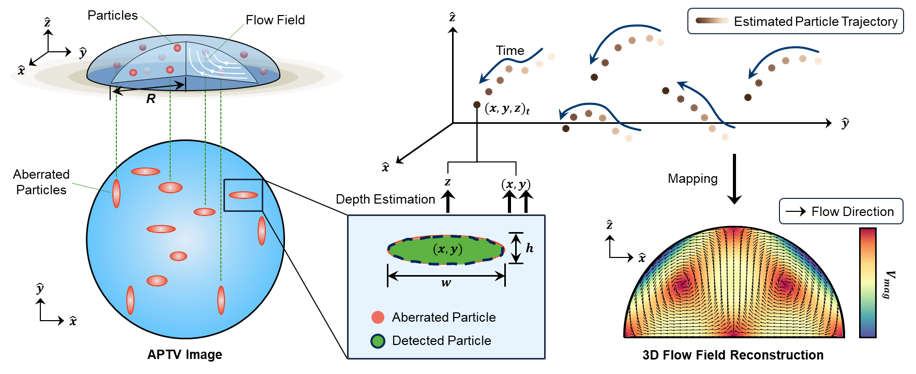
Figure 1. Deep learning-based particle tracking and 3D flow field reconstruction
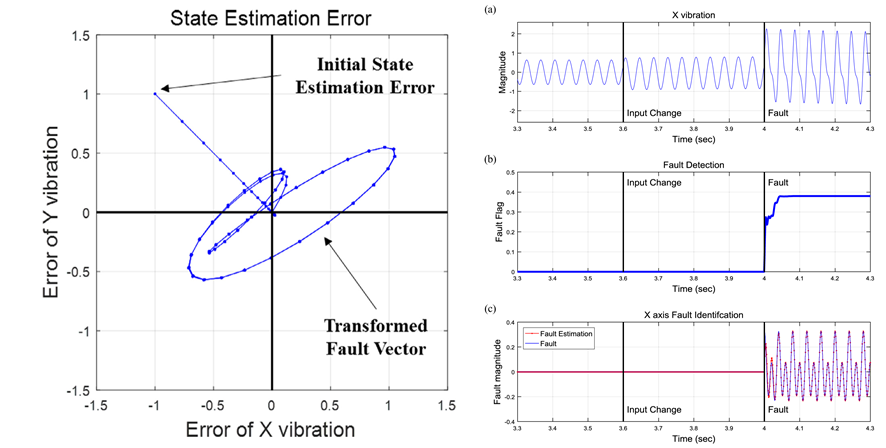
Figure 2. Anomaly detection and fault diagnosis
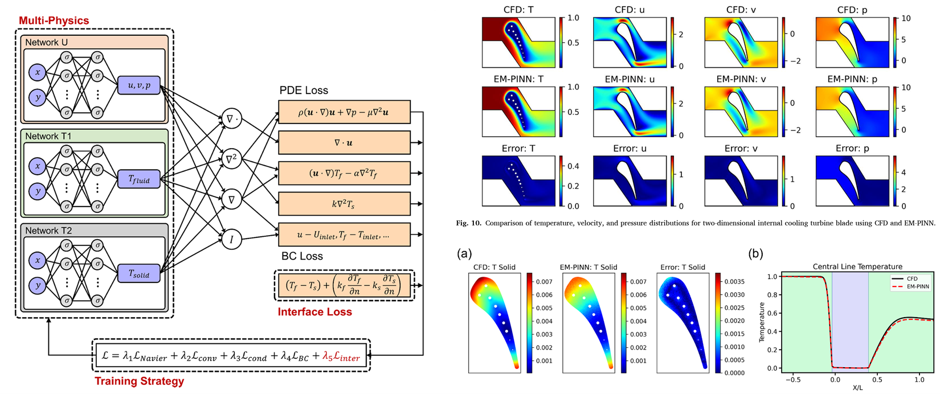
Figure 3. Multiphysics system analysis using physics-informed machine learning
Research area 2 – Inverse Design & Process Optimization
We investigate AI-based inverse design and optimization methods for efficiently identifying designs and manufacturing conditions that satisfy target performance or material properties.
- • Surrogate-based process optimization: We employ data-driven surrogate models to efficiently optimize manufacturing processes that involve high computational or experimental costs.
- • Inverse design: We identify design variables, material compositions, or process conditions that can achieve specified target performance or properties
- • Generative design: We use generative AI to produce diverse and novel design candidates satisfying prescribed requirements, rather than identifying only a single optimal solution.
- • Multi-objective optimization: We explore optimal design alternatives by simultaneously considering competing objectives such as performance, manufacturability, reliability, and cost.
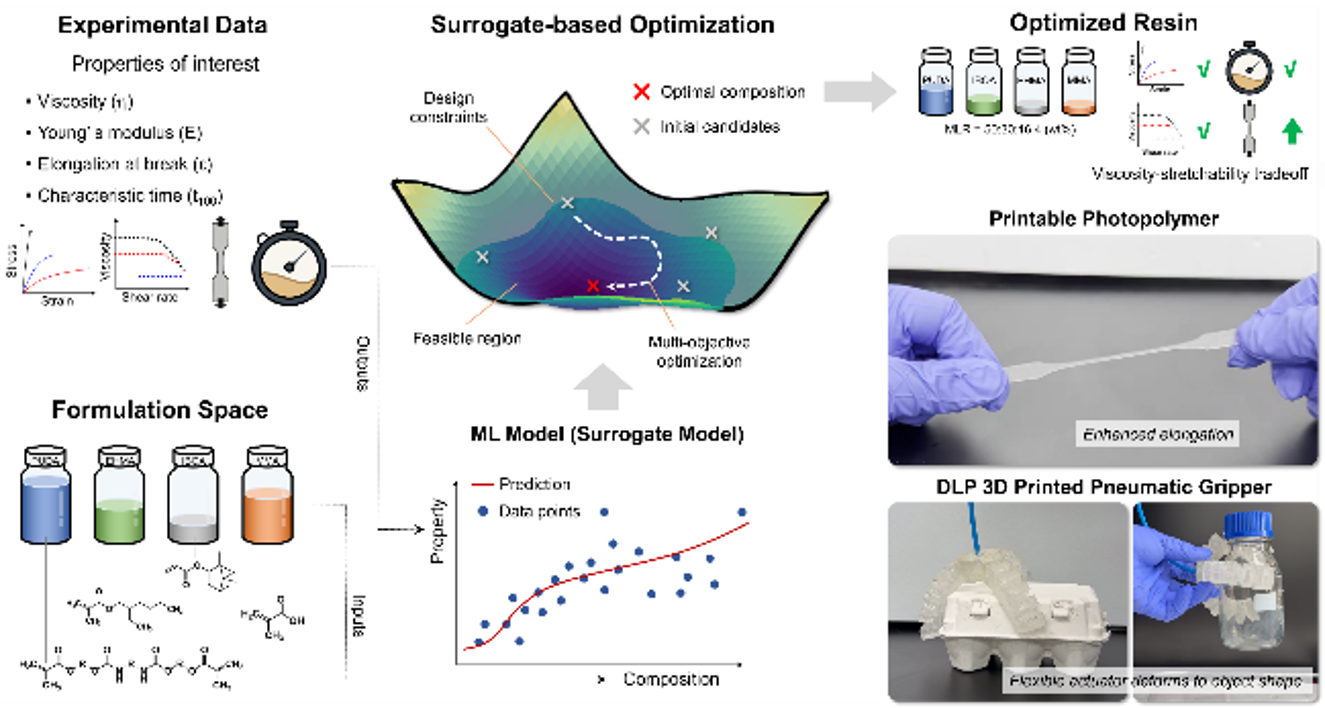
Figure 4. Surrogate-model-based process optimization and inverse design
Research area 3 – AI-based Control & Physical AI
We develop learning-based control technologies that enable AI to perceive the state of physical systems and autonomously make decisions in real-world environments.
- • Reinforcement learning-based control: We develop reinforcement learning-based control methods that learn optimal control policies through interactions with physical systems and performance feedback.
- • Sim-to-real learning: We investigate transfer and robust learning methods for reliably deploying control policies trained in simulation to real manufacturing systems.
- • Imitation learning: We leverage expert control data and demonstrations to reduce exploration costs during early stages of learning and efficiently acquire effective control policies.
- • Hybrid intelligent control: We combine physics- and model-based control methods with data-driven learning to achieve both stability and adaptability.
- • Physical AI: We aim to extend our research toward Physical AI-based autonomous manufacturing systems that integrate sensing, digital twins, and autonomous control to enable perception, decision-making, and action in real manufacturing environments
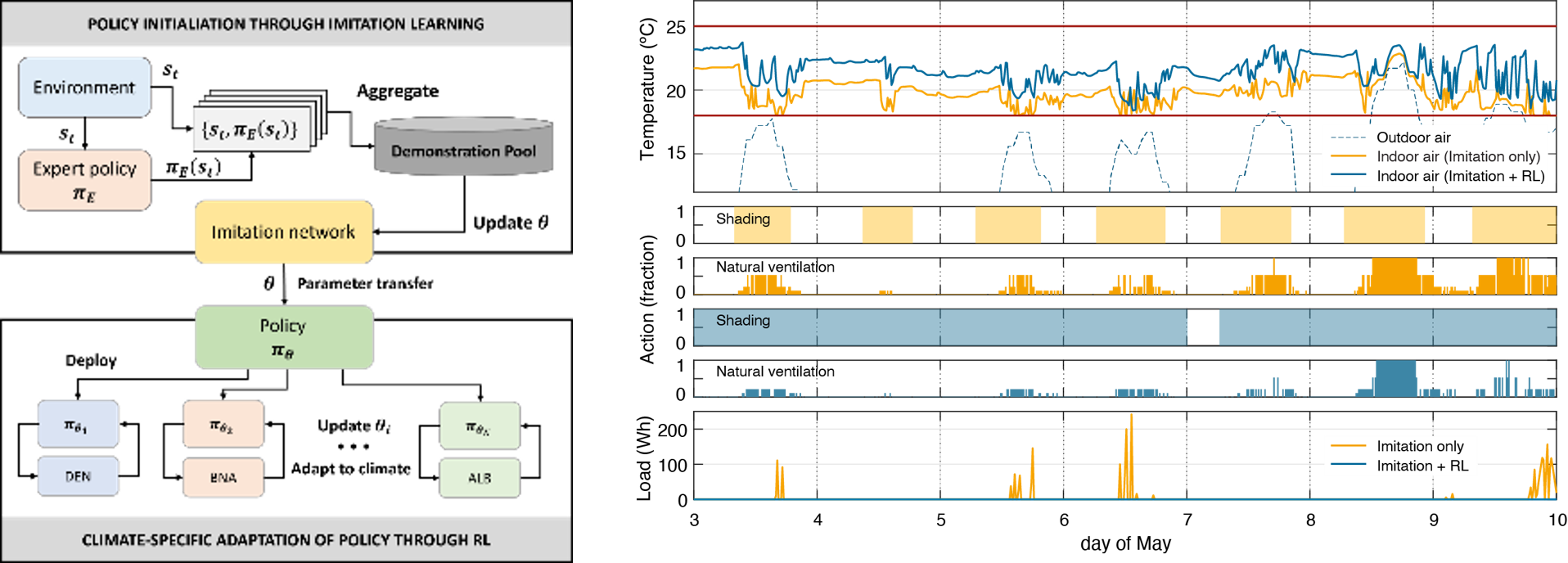
Figure 5. Expert-assisted reinforcement learning control
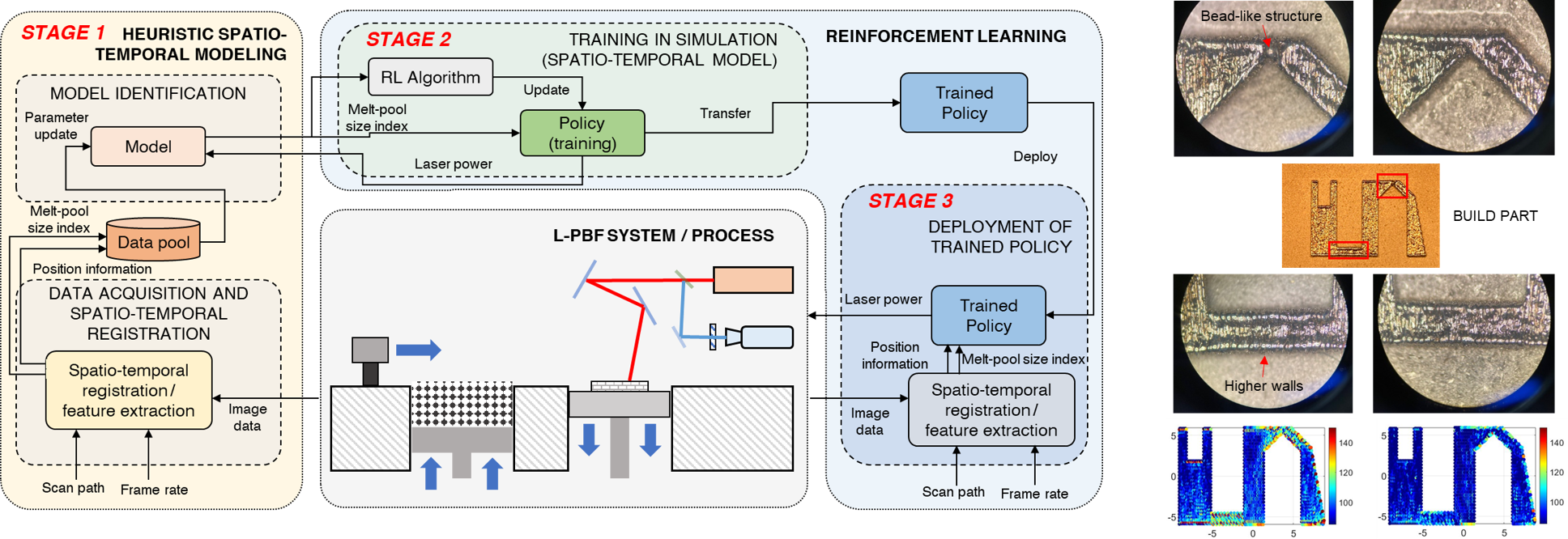
Figure 6. Sim-to-real reinforcement learning-based control of additive manufacturing processes
Selected Publications
- 1. Y. Song+, B. Park+, S. Jeon, H. Kweon, S. Lee*, and J. Na, “Machine learning guided formulation design of digital light processing printable elastomers beyond viscosity stretchability tradeoff,” Nature Communications, 2026.
- 2. C. Won+, J. Lee+, A. Lee, B. Park, and S. Lee*, “Spectral modal operator learning framework with decoupled spatial and temporal representations for unsteady flows,” Physics of Fluids, 2026
- 3. J. Lee, C. Won, A. Lee, B. Park, S. Lee*, and S. Lee*, “A Geometry-adaptive Physics-informed Operator Framework Generalized for Arbitrary Geometries,” Engineering Applications of Artificial Intelligence, 2026.
- 4. B. Park+, J. Mauch+, H. Kweon+, J. Kriegseis, S. Lee*, and H. Kim*, “STAR-APTV: Deep learning–enabled 3D flow reconstruction in evaporating multicomponent droplets,” Measurement, 266, 120368, 2026.
- 5. J. Lee, S. Shin, H. Choi, A. Lee, B. Park*, and S. Lee*, “Extended multiphysics-informed neural network for conjugate heat transfer problems,” International Journal of Heat and Mass Transfer, 246, 127098, 2025
- 6. B. Park*, A. Chen, and S. Mishra, “Real-time melt pool homogenization through geometry-informed control in laser powder bed fusion using reinforcement learning,” IEEE Transactions on Automation Science and Engineering, 22, 2986–2997, 2024.
- 7. B. Park, A. R. Rempel*, and S. Mishra, “Performance, robustness, and portability of imitation-assisted reinforcement learning policies for shading and natural ventilation control,” Applied Energy, 347, 121364, 2023.
- 8. H. Jeong, B. Park, S. Park, H. Min, and S. Lee*, “Fault detection and identification method using observer-based residuals,” Reliability Engineering & System Safety, 184, 27–40, 2019.
- • + Equal contribution; * Corresponding author