

Manufacturing Systems and Design Engineering Programme, Seoul National University of Science and Technology
232 Gongneung-ro, Nowon-gu, Seoul, 139-743, Korea Tel:+82-2-970-7277
Copyright © Seoul National University of Science and Technology. All Rights Reserved.
 Electro-Mechanical Systems Lab
Electro-Mechanical Systems Lab (Prof. Kwanlae Kim)
Electro-Mechanical Systems Laboratory is conducting research on designing and manufacturing sensors and power generators using ferroelectric materials. Today, there is growing social demands for Internet of Thing (IoT) sensors and power generators for wasted-mechanical energy. We develop self-powering sensors and piezoelectric nano-generators using advanced material processing methods and microfabrication techniques. We are also intensively using AFM-based electrical characterization techniques to characterize functional materials/devices.
Research area <1> - Energy harvesting
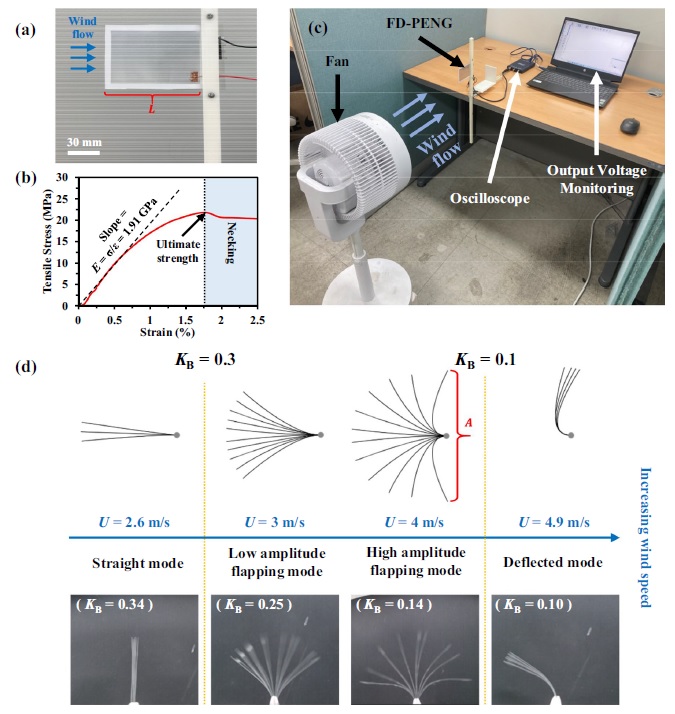
| Wind energy harvesting based on piezoelectric materials |
• 최신 생산공정인 전기방사기법으로 압전 나노섬유 매트 제조
|
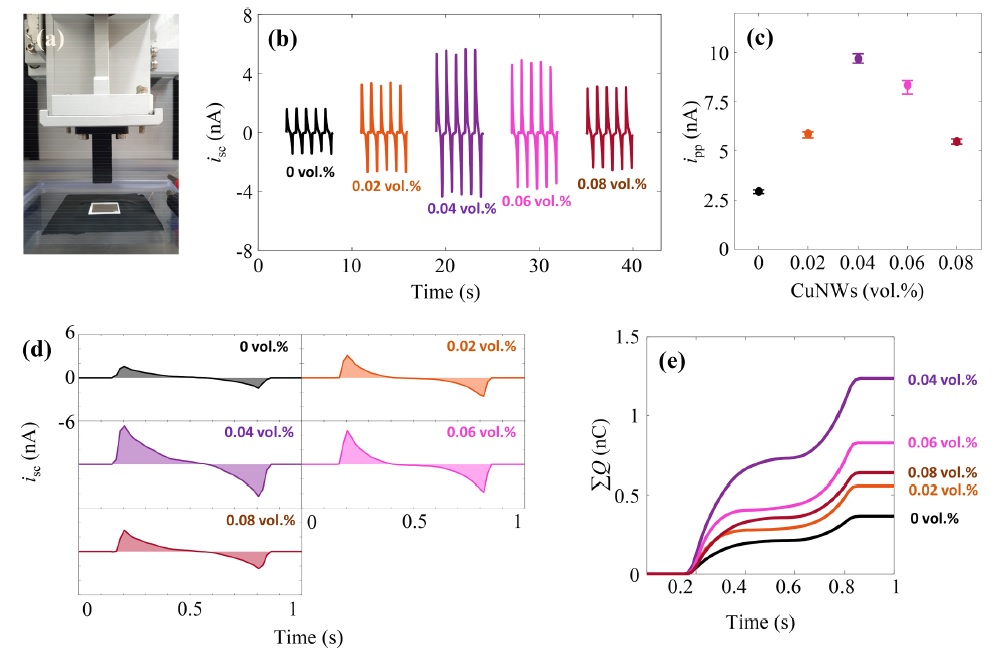
| Material design for piezoelectric composites |
• 웨어러블 자가발전 전자기기 개발을 위하여 압전성과 유연성을 동시에 갖춘 압전복합체 개발 필요
|
| Fabrication of wearable piezoelectric pressure sensor for application to healthcare devices |
• 압전복합체 디자인을 통하여 자가발전 맥박측정 센서를 개발
|
Research area <2> - Flexible electronics
| Fabrication of flexible and transparent electrode |
• 전기방사기법과 물리적기상증착법(PVD)를 활용하여 투명하고 유연한 전극을 제조함. • 폴리머인 PVDF 나노섬유에 금속박막을 증착하여 코어-쉘 구조의 나노섬유를 형성함. • 제조된 전극에 대하여 면저항과 투명도, 그리고 유연성을 측정 평가함. • Engineered kirigami design of PVDF‑Pt core–shell nanofiber network for flexible transparent electrode (https://doi.org/10.1038/s41598-023-29812-5) |
Research area <3> - Nano characterizations
| Characterization of piezoelectric nanomaterials using AFM |
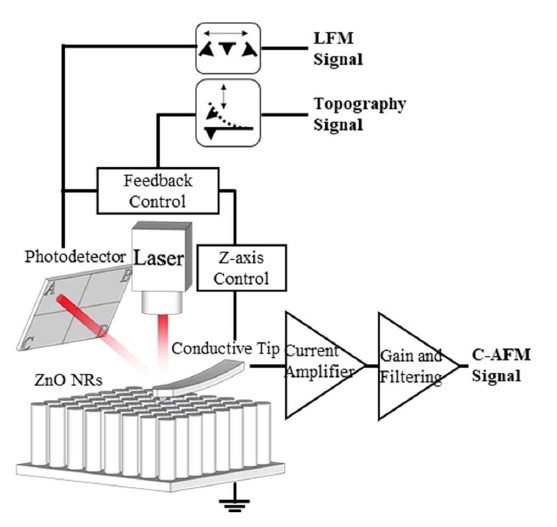
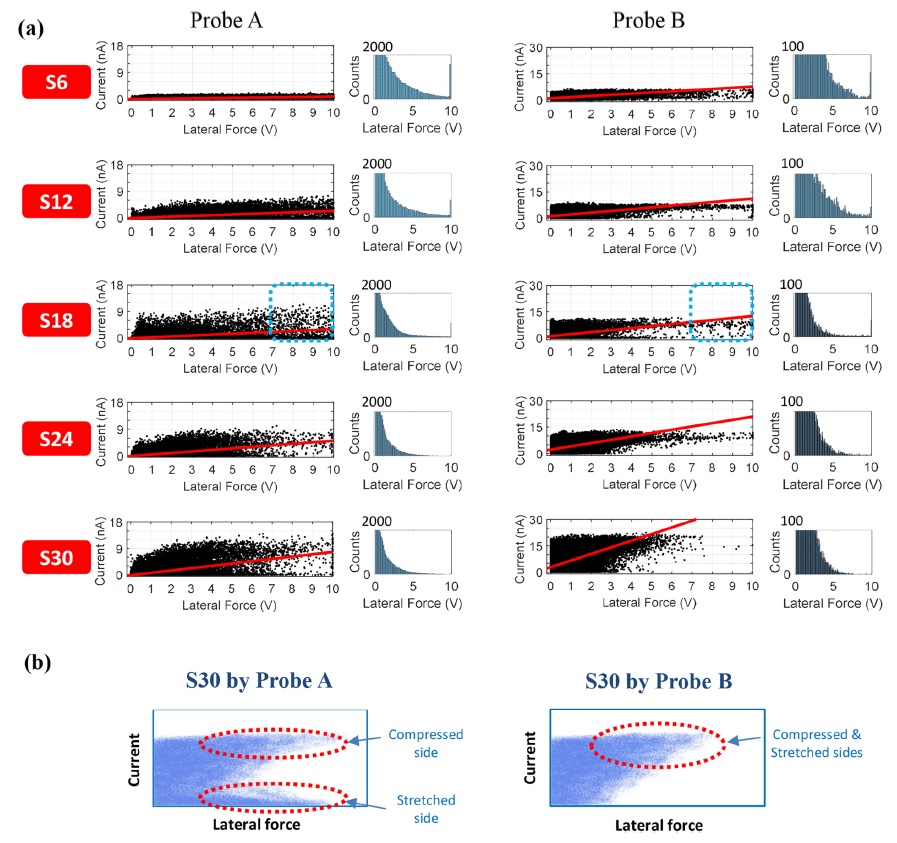
• 원자력간힘 현미경(atomic force microscopy)을 활용하여 압전 나노소재의 압전특성을 정밀 평가함. • Conductive force microscopy 와 Lateral force microscopy 동시 측정을 통하여 압전 나노소재의 성능을 체계적으로 분석 평가 가능. • 반도체 물질인 산화아연(ZnO)의 쇼트키 장벽을 넘게 될 경우 AFM 탐침을 통한 전류 발생하는 원리. • Simultaneous acquisition of current and lateral force signals during AFM for characterising the piezoelectric and triboelectric effects of ZnO nanorods (https://doi.org/10.1038/s41598-021-82506-8) |